Block paving repairs play a crucial role in maintaining the strength, safety, and appearance of driveways and outdoor surfaces. Over time, even well-installed paving can begin to show signs of wear such as uneven blocks, weed growth, or water pooling. If left untreated, these issues can quickly worsen, leading to more costly damage and reduced kerb appeal.
However, when problems arise, many homeowners face a common question: should they handle the repairs themselves or hire a professional? While DIY solutions may seem cost-effective and convenient at first, they are not always suitable for every situation. In many cases, the right approach depends on the severity of the damage, the tools required, and the desired long-term results.
In this guide, we will explore when DIY methods are enough and when professional expertise is the smarter choice, helping you make an informed decision for lasting results.
What Are Block Paving Repairs?
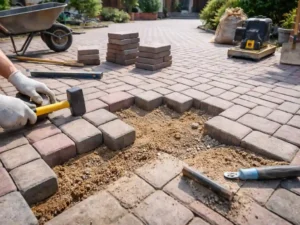
Block paving repairs refer to the process of fixing damaged, uneven, or worn paving surfaces to restore their stability, appearance, and functionality. This typically involves lifting and re-laying blocks, correcting the base, and replacing jointing materials to ensure a smooth and durable finish.
In simple terms, these repairs address both surface-level issues and underlying structural problems that can affect the longevity of a driveway or patio. More specifically, the most common types of repairs include:
- Re-levelling sunken or uneven blocks
- Replacing loose or damaged paving stones
- Removing weeds, moss, and debris from joints
- Re-sanding joints to improve stability
- Fixing drainage issues to prevent water pooling
By addressing these problems early, property owners can extend the lifespan of their paving while maintaining a safe and visually appealing surface.
Common Problems That Require Repairs
Over time, even high-quality paving surfaces can develop issues due to weather conditions, regular use, and natural ground movement. As a result, recognising these problems early can help prevent more extensive and costly damage.
Some of the most common issues that require block paving repairs include:
- Uneven or sunken surfaces
This often occurs when the sub-base shifts or compacts unevenly, creating dips and trip hazards. - Loose or wobbly blocks
When jointing sand erodes, blocks can lose stability and begin to move under pressure. - Water pooling and drainage problems
Poor drainage can lead to standing water, which weakens the foundation over time. - Weed growth and moss buildup
Gaps between blocks provide the perfect environment for weeds, affecting both appearance and structure. - Fading, staining, or surface wear
Exposure to UV rays, oil spills, and heavy traffic can cause discoloration and deterioration. - Edge restraint failure
Damaged or weakened edges can allow blocks to spread and lose alignment.
By identifying these issues early, homeowners can take timely action and choose the most effective repair approach before the damage worsens.
DIY Block Paving Repairs: When It Makes Sense
In many cases, homeowners can handle minor block paving repairs without the need for professional help. While not every issue is suitable for a DIY approach, certain small-scale problems can be fixed quickly and cost-effectively with the right tools and basic knowledge.
For instance, DIY repairs are ideal for:
- Re-sanding joints
If the jointing sand has worn away, adding fresh kiln-dried sand can help stabilise the blocks. - Minor re-levelling
Small uneven areas can often be corrected by lifting a few blocks, adjusting the base, and re-laying them. - Cleaning and weed removal
Removing weeds, moss, and dirt improves both the appearance and longevity of the surface. - Sealing the surface
Applying a sealant can protect against stains, weather damage, and future wear.
In particular, DIY methods are most effective when the damage is limited to a small area and does not involve deeper structural problems. Additionally, they allow homeowners to address issues promptly, preventing them from becoming more serious over time.
However, it is important to understand the limits of DIY work before attempting more complex repairs.
Risks and Limitations of DIY Repairs
On the other hand, while DIY solutions can be effective for minor issues, they are not always the best option for more complex block paving repairs. Without the right experience or equipment, small mistakes can lead to bigger problems over time.
Some key risks and limitations include:
- Lack of proper tools and expertise
Professional-grade equipment and technical knowledge are often required to achieve a level and long-lasting finish. - Incorrect base preparation
If the sub-base is not properly compacted or repaired, the paving may sink again, even after fixing the surface. - Temporary results
DIY fixes may address visible issues but fail to resolve underlying structural problems. - Time and effort involved
What seems like a simple repair can quickly become time-consuming, especially without prior experience. - Risk of further damage
Improper handling of blocks or materials can worsen the condition, increasing future repair costs.
Despite this, many homeowners attempt DIY repairs to save money. However, when the issue goes beyond surface-level damage, relying on professional expertise is often the more practical and cost-effective solution in the long run.
Professional Block Paving Repairs: What Experts Offer
In contrast, professional services provide a more comprehensive and long-lasting solution for block paving repairs, especially when dealing with structural or recurring issues. Experienced contractors not only fix visible damage but also address the underlying causes to prevent future problems.
Typically, professional repair services include:
- Full re-levelling of affected areas
Experts carefully lift the blocks, correct the base, and re-lay them to ensure a perfectly even surface. - Sub-base repair and compaction
A strong foundation is essential, and professionals use the right materials and equipment to stabilise the ground beneath. - Joint re-sanding and sealing
High-quality jointing sand and sealants improve durability, reduce weed growth, and enhance appearance. - Drainage correction
Proper water flow is restored to prevent pooling and long-term damage.
Additionally, hiring professionals offers several key advantages:
- Long-lasting results
Repairs are carried out to industry standards, reducing the likelihood of recurring issues. - Time efficiency
What might take days as a DIY project can often be completed much faster by experts. - Improved aesthetics
A professional finish enhances the overall look and value of the property. - Access to specialised tools and materials
This ensures a higher-quality outcome compared to basic DIY methods.
Therefore, while professional services may involve a higher upfront cost, they often deliver better value by ensuring durability, safety, and a polished finish.
When to Hire Experts for Block Paving Repairs
In such cases, deciding to hire professionals for block paving repairs becomes essential to ensure long-term durability and safety. While minor issues can often be handled independently, more serious damage typically requires expert attention and specialised equipment.
You should consider hiring professionals when:
- Large areas are sunken or uneven
Extensive sinking usually indicates deeper sub-base problems that need proper excavation and reinstallation. - Problems keep recurring
If the same issue returns after a DIY fix, it often means the root cause has not been addressed. - Drainage issues are present
Persistent water pooling or runoff problems require accurate grading and drainage correction. - Structural damage is visible
Cracked, spreading, or misaligned blocks may signal failure in edge restraints or foundation layers. - The surface handles heavy traffic
Driveways or commercial areas exposed to frequent or heavy loads need professional-grade repairs. - You want a long-lasting, high-quality finish
Experts ensure precision, durability, and a visually appealing result.
Therefore, while DIY methods can be useful in limited situations, hiring professionals is the smarter choice when the damage is complex, widespread, or likely to worsen over time.
Cost Comparison: DIY vs Professional Repairs
When considering block paving repairs, cost is often one of the biggest deciding factors. While DIY methods may appear more affordable upfront, the long-term value can vary depending on the quality and durability of the repair.
DIY Repairs: Lower Initial Cost
- Minimal labour costs since you do the work yourself
- Basic tools and materials are relatively inexpensive
- Suitable for small, surface-level fixes
However, while the upfront cost is lower, DIY repairs may lead to:
- Repeat expenses if the issue is not fully resolved
- Additional material costs due to mistakes
- Short-term results that require frequent maintenance
Professional Repairs: Higher Investment, Better Value
- Includes labour, materials, and expertise
- Access to specialised equipment
- Comprehensive repair that addresses root causes
Although professional services involve a higher initial cost, they often provide:
- Long-lasting results, reducing the need for repeat repairs
- Improved durability and performance
- Better visual finish and property value
Key Cost Factors to Consider
- Size of the area being repaired
- Severity of the damage
- Type and quality of materials used
- Drainage or structural work required
Ultimately, while DIY may seem cost-effective at first, professional repairs can offer better long-term savings by preventing recurring issues and ensuring a more reliable outcome.
Step-by-Step Overview of Professional Repair Process
When it comes to block paving repairs, professionals follow a structured process to ensure long-lasting and high-quality results. Unlike quick fixes, this method addresses both visible damage and underlying issues.
Inspection and Assessment
First, experts thoroughly inspect the paved area to identify the root cause of the problem. This includes checking for sub-base failure, drainage issues, and surface damage.
Lifting the Affected Blocks
Next, the damaged or uneven blocks are carefully lifted without causing unnecessary breakage, allowing access to the foundation below.
Cleaning and Preparation
The removed blocks are cleaned and set aside for reuse. At the same time, the base is cleared of debris and old materials.
Rebuilding the Sub-Base
If required, the sub-base is repaired or replaced using proper materials and compaction techniques to create a stable foundation.
Re-Laying the Blocks
After that, the blocks are reinstalled in their original pattern, ensuring proper alignment and spacing.
Compaction and Levelling
The surface is then compacted using specialist equipment to achieve a firm, even finish.
Jointing and Finishing
Finally, kiln-dried sand is brushed into the joints, and sealing may be applied to enhance durability and appearance.
By following this step-by-step approach, professional repairs ensure that the paving remains stable, functional, and visually appealing for years to come.
How to Choose the Right Contractor
Before hiring a professional for block paving repairs, it is important to evaluate your options carefully. Choosing the right contractor can make a significant difference in the quality, durability, and overall success of the repair work.
Check Experience and Expertise
Start by looking for contractors with proven experience in paving and repair work. In particular, those who specialise in block paving are more likely to deliver reliable and long-lasting results.
Read Reviews and Testimonials
Next, check online reviews and client feedback to understand the contractor’s reputation. Consistent positive reviews are a good indicator of quality service and customer satisfaction.
Ask for Previous Work or Portfolio
Reputable professionals should be able to show examples of completed projects. This helps you assess their workmanship and attention to detail.
Verify Insurance and Guarantees
Make sure the contractor has proper insurance coverage and offers guarantees on their work. This provides peace of mind and protection against potential issues.
Compare Quotes Transparently
It is always wise to get multiple quotes before making a decision. However, rather than choosing the cheapest option, focus on value, materials used, and the scope of work included.
Assess Communication and Professionalism
Finally, consider how clearly and professionally the contractor communicates. A reliable expert will explain the process, timelines, and costs upfront.
By taking these steps, you can confidently choose a contractor who delivers high-quality block paving repairs that stand the test of time.
Preventative Maintenance Tips
To prevent future damage and minimise the need for frequent block paving repairs, regular maintenance is essential. By taking a proactive approach, you can extend the lifespan of your paving and keep it looking clean and well-maintained.
Regular Cleaning
To begin with, keep the surface free from dirt, debris, and organic matter. Occasional pressure washing helps maintain appearance and prevents buildup that can weaken joints.
Re-Sanding the Joints
Over time, jointing sand can wash away due to weather and usage. Therefore, replenishing kiln-dried sand at least once a year helps maintain stability and reduce movement between blocks.
Control Weed and Moss Growth
In addition, removing weeds and moss early prevents them from spreading and damaging the structure. Using appropriate treatments can also slow regrowth.
Ensure Proper Drainage
Water pooling is a common cause of damage. As a result, checking and maintaining proper drainage helps protect the sub-base and prevents sinking issues.
Apply Sealant
Sealing the surface provides an extra layer of protection against stains, moisture, and UV damage. It also enhances the overall appearance of the paving.
Inspect the Surface Periodically
Finally, conduct routine inspections to identify early signs of wear such as loose blocks or minor dips. Addressing these issues promptly can prevent more serious problems.
By following these maintenance tips, homeowners can significantly reduce repair costs and ensure their paving remains durable and visually appealing for years to come.
FAQs
How long do block paving repairs last?
In most cases, block paving repairs can last between 5 to 10 years, depending on the quality of the repair work, materials used, and ongoing maintenance. Professional repairs typically last longer because they address underlying issues.
Can I carry out block paving repairs myself?
Yes, you can handle minor block paving repairs such as re-sanding joints, cleaning, or fixing small uneven areas. However, for larger or structural problems, hiring professionals is recommended for long-term results.
How much do block paving repairs cost in the UK?
The cost of block paving repairs varies based on factors like the size of the area, severity of damage, and materials required. Generally, small repairs may cost a few hundred pounds, while extensive work can run into higher costs.
What causes block paving to sink?
Sinking usually occurs due to a poor or weakened sub-base, inadequate compaction, or drainage issues. Heavy loads and water accumulation can also contribute to the problem over time.
How often should block paving be maintained?
For best results, paving should be maintained at least once a year. Regular cleaning, re-sanding, and inspection help prevent major damage and reduce the need for frequent repairs.
Is sealing necessary after block paving repairs?
While not mandatory, sealing is highly recommended. It helps protect the surface from stains, weather damage, and weed growth, while also extending the lifespan of the repairs.
Are professional repairs worth the cost?
Yes, professional block paving repairs often provide better long-term value. Although the upfront cost is higher, they reduce the likelihood of recurring issues and ensure a more durable finish.
Conclusion
In conclusion, deciding between DIY and professional block paving repairs depends largely on the extent of the damage and the results you expect. While minor issues such as re-sanding or basic cleaning can often be handled Independently, more complex problems require expert attention to ensure long-term durability.
Moreover, although DIY methods may seem cost-effective initially, they can lead to repeated fixes if underlying issues are not properly addressed. On the contrary, professional repairs provide a more reliable and lasting solution by combining expertise, proper tools, and high-quality materials.
Ultimately, the best approach is to assess the condition of your paving carefully and choose the option that offers the greatest value over time. If in doubt, seeking professional advice can help you avoid costly mistakes and keep your driveway or patio in excellent condition for years to come.